



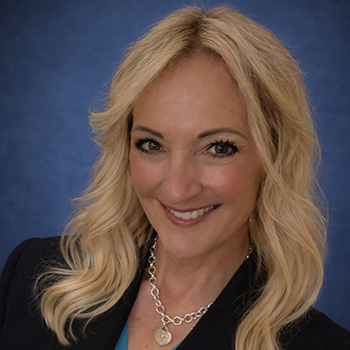
Shelly J. Meierarend, PMP
IBM Z and LinuxONE Client and Academic Global Skills Leader
IBM Z Ecosystem – Infrastructure
IBM
Buford, Georgia, United States
This article features Shelly J. Meierarend, one of the top four 2026 Influential Mainframers.
Editor’s Note: We often talk about the mainframe in terms of MIPS and transaction speeds, but Shelly sees the platform through a different lens: humanity. To capture her unique perspective on shaping the future of the workforce, we’ve opted for an expressive, long-form Q&A format. It is a candid look at why the future of the IBM Z ecosystem isn’t just about technical mastery; it’s about the people who run it. -Penney
The Human Element of the Mainframe
You’ve successfully scaled massive programs like GSAP and launched the Mainframe Career Depot. Is there a specific story that illustrates why this work matters to you?
I have many stories from the IBM Z Global Skills Accelerator Program (GSAP). A country cruise ship musician. A restaurant general manager. A teacher. A grocery store clerk. Not a single one of them took what the world would call the traditional path into technology. But here is what I know about every single one of them: they were already extraordinary before they ever heard the word mainframe.
The teacher spent years breaking down complexity. The restaurant manager solved problems in real time, with no margin for error. The grocery store clerk showed up consistently and reliably. What the GSAP did not do was rescue these individuals. It recognized them. It created a door wide enough for talent that does not always come in the expected package—and every single one of them was brave enough to walk through it.
Mainframe did not change who they are. It gave [them] a new and extraordinary place to shine.
There is no skills gap. The talent is there. It has always been there. The gap is in investing in people, in actually believing that someone without a computer science degree can become someone you trust with the most critical platform in your enterprise.
Building an Hourglass Workforce
Several nominators credit you with shifting the mainframe workforce from an “inverted cone” to a healthy “hourglass” shape. What is the most important thing an employer can do to ensure success for those new to mainframe?
The inverted cone is terrifying—a workforce heavy at the top with seasoned, brilliant, irreplaceable professionals, and nearly nothing coming up underneath them. No bench. No pipeline. No one is waiting in the wings to catch what is about to be dropped.
But fixing the shape of a workforce is not just a recruiting problem; it never was. You can pour new talent into a broken container and watch it leak right out. Hiring is the beginning of the story, not the success of it.
“New mainframers do not leave because the work is too hard. They leave because they felt invisible—because no one invested in their growth beyond getting them technically functional.”
If you want a new mainframer to succeed and stay, be intentional about belonging from day one—and then keep being intentional every single day after that.
Employers can:
- Pair Up: Pair that new hire with a mentor who has the time and patience to understand that transferring knowledge is now part of their legacy.
- Create Space for Questions: Let the new hire shadow. Let them make small mistakes in safe environments. Let them see the full picture of what this platform does and why it matters before you hand them a piece of it to own.
- Keep Investing in Skills: The onboarding moment is not the finish line; it is the starting block. The mainframe ecosystem evolves, and your people need to evolve with it. Growth should never stop. If you stop investing in their development, you are quietly telling them they have peaked—and talented people do not stay where they feel capped or stagnant.
- Practice Radical Appreciation: Recognize their growth out loud and celebrate their wins. When a new mainframer earns a badge or solves a hard problem, shout it out. People who feel valued do not look for the exit; people who feel invisible do.
- Use Community as Retention: Send them to SHARE or IBM TechXchange. Let them sit in rooms full of people who love this platform. There is something that happens the first time a new mainframer walks into a conference and feels the pulse of this ecosystem. It anchors them. It makes the work feel like a calling instead of just a job.
How do we address the “knowledge walkout”?
The knowledge walkout happening right now in our industry is one of the most preventable crises. When a 30-year mainframe veteran retires without a deliberate knowledge transfer plan, we do not just lose an employee; we lose a library.
The tips, the tricks, and the institutional memory that never made it into a manual are lost quietly every single day. Hiring someone to shadow the people we are about to lose is not a luxury. It is a responsibility.
“The middle—that mid-tenured talent we have worked so hard to build—is the bridge. And bridges require investment, attention, and care [so it can] hold weight over time.”
Employers must create structured overlap, intentional shadowing, and documented institutional knowledge before that person walks out the door. That is not optional; that is stewardship. The hourglass only works if both ends are connected.
Localization as an Innovation
A key evolution in your work seems to be providing GSAP coaching and SME support in local languages. How has removing the language barrier affected the success rate and confidence of learners?
When we started expanding GSAP coaching and subject matter expert (SME) support into local languages, we discovered more than just an improvement in comprehension. There is a profound difference between a learner who is processing content and a learner who is truly absorbing it.
When someone is working in their second or third language, a portion of their mental energy—energy that should be going toward mastery—is spent on translation. Remove that barrier, and something remarkable happens. The questions get bolder. The engagement gets deeper. The learner stops holding back and starts leaning in.
“I have watched learners transform, not because the content changed, but because for the first time, they could fully receive it.”
When a success coach can meet a learner in their own language, the relationship stops being transactional and becomes genuinely supportive. The learner trusts the process and themselves more, and that trust is what carries them through the moments where the content is complex, and the temptation to give up is loudest.
This confidence shift is measurable—not just in program completion rates, but in the way learners carry themselves. They participate more actively in communities, ask for help sooner, and mentor each other. They start to see themselves as mainframers. They graduate with pride and go on to become the trusted hands on the most critical platforms in the world.
“Removing the language barrier was not a program enhancement; it was an equity decision. It was us saying that where you are from does not limit how far you can go.”
Our mission has always been to find talent wherever it lives and give it a real, fair chance to grow. If we are serious about that, we cannot ask people to climb a mountain while carrying a language barrier on their backs at the same time.
Closing the Skills-to-Employment Gap
The Mainframe Career Depot is a major innovation for the community. What did you notice in the traditional hiring process that made creating a marketplace between talent and employers a necessity?
We noticed a disconnect so wide, so persistent, and so unnecessary that it was genuinely frustrating. On one side, we had talented, motivated people who had completed courses, achieved industry-recognized badges, and proven their capabilities. They were ready to work, but they were sending applications into the void and questioning whether their investment in themselves would ever pay off.
On the other side, we had employers who were desperate for mainframe talent, watching their senior teams move toward retirement. They were telling us that finding skilled people was their single biggest pain point.
“We were all skilling people up into a fog. There was no centralized, dedicated, trusted space where a mainframe-ready candidate could raise their hand and say, ‘I am here, I am skilled, and I am ready.'”
These two groups were looking for each other but somehow not finding one another. That is not a talent problem; that is an infrastructure problem. We knew we could build the bridge to connect them.
Skilling Up Into a Fog
The traditional hiring process was built for a general market where mainframe skills are often invisible. A recruiter scanning resumes for keywords does not always know what to look for, and a hiring manager posting a generic infrastructure role does not always know how to signal that mainframe experience is what they actually need.
The result was a matching failure happening in slow motion. We had done an extraordinary job of training people. We had solved a significant portion of the supply problem, but supply without connection to demand is just potential sitting on a shelf.
A New Door to Employment
The IBM Mainframe Career Depot was born out of a deep belief that the people we invested in deserved better than hoping the right employer happened to stumble across their resume. They deserved a community-specific marketplace where being a mainframer didn’t need explaining.
What we built is not just a job board; it’s a signal to every learner that we are not going to abandon them at the finish line, and to every employer that the talent does exist.
“We create pathways when there are no pathways. The least we could do was make sure the door was not just unlocked, but wide open and clearly marked. The Mainframe Career Depot is that door.”
As an industry, we do not wait for permission to innovate. The people who have poured their hearts into earning their place in this ecosystem deserve more than a process that was never designed to see them. Today, the Depot connects those employers with real talent every single day.
Advice for the New to Z Generation
With over 30 “New to Z” chapters now operating globally, you’ve built a massive community. For a professional starting their first week on the platform, what is the advice you’d give to help them succeed?
One piece of advice? There are so many! Learn everything you can. Ask every question. Find your mentor. Embrace the complexity. Trust the process.
But if I have to strip it down to just one thing that I believe separates the mainframers who thrive from the ones who do not, it is this: Fall in love with the platform before you try to master it.
“The mainframe is not like anything else in technology. It is not something you can skim or fake your way through. It is deep, vast, and layered in ways that will humble you repeatedly—and that is not a flaw; that is the point.”
The people who have spent 30-plus years on this platform will tell you they are still learning. They say it not with exhaustion, but with genuine wonder. That wonder is the secret. That curiosity is the fuel.
When you let yourself be amazed by the fact that this platform powers global healthcare and the majority of the world’s financial transactions, the complexity becomes fascinating instead of overwhelming. The learning curve becomes a journey instead of a burden.
You Are Not Alone
I want every first-week professional to understand this immediately: you are not alone in this. Not even close. The New to Z community exists precisely for this moment in your career. We have 30 active, global chapters full of people who were exactly where you are: nervous, curious, and unsure—and who came out the other side passionate.
Find your chapter. Create one if there isn’t one (we will help you!). Show up and ask the questions you think are too basic; I promise you, someone else in that room has the same question and is too afraid to raise their hand. Go to the events and conferences. Introduce yourself to the person sitting next to you, because that person might become your mentor, your collaborator, or your closest professional friend for the next twenty years.
“This community is one of the most generous and welcoming in all of technology. Let it hold you while you grow.”
Find a mentor who will tell you the truth—not just the technical truth, but the career truth. On the days when it feels hard, remember that the people who came before you built something extraordinary, and now you are part of the team carrying it forward. That is not a small thing. That is everything.
So, let it matter to you. Show up curious every single day. If you bring your whole self to this work—your questions, your background, and your hunger—you will not just find success. You will find a career worth building and a community worth belonging to.
A Calling, Not a Job Description
What is something you want people to know?
I love my job, and not in the polished, LinkedIn-friendly way. I mean it in the way that keeps me up at night thinking about the next idea or makes me emotional when a pre-apprentice sends me a hand-written card celebrating their one or two-year work anniversary. I genuinely, deeply, completely love what I do, and I never take a single day of it for granted.
Passion pours out of me because I genuinely believe in what we are doing. When you love what you do at that level, and you inspire your team to feel it and own it, the numbers show up on their own. Passion produces results that spreadsheets cannot predict.
But I do not do this alone. Not even close.
I have the privilege of leading a large team of people who truly feel this work the way I feel it. They bring their whole hearts to a mission that most of the world does not even fully understand. While the programs often get the recognition, my team is the reason those programs work. Leading them is one of the greatest honors of my professional life; each and every one of them means a great deal to me.
None of this happens without leadership that believes in the mission. I want to express my heartfelt gratitude to my manager, Meredith Stowell, and to the many executives across IBM who have opened doors and said ‘yes’ when it mattered most. Their belief in our ideas, this team, and our Z Skills Programs makes everything possible.
Most see IBM Z and think iron and code. I see people.
I see the restaurant general manager who became an app developer, and the grocery store self-stocker who discovered that the mainframe fit the way his mind worked. I see the first-generation student whose career changed the trajectory of their entire family.
We are not working with a legacy system; we are working with a living, breathing, world-changing platform and the extraordinary people who run it. I sit at the intersection of technology and humanity for a living. That is not a job description. That is a calling.
A Little About Shelly
- The Title that Matters Most: I am a proud mom. Watching my son prepare for dental school and my teenage daughter find her own voice has been the greatest privilege of my life.
- Happy Place: Live music. Concerts are where I recharge and remember that joy does not need a reason.
- The Dream: I am deeply drawn to the water and palm trees. One day I will live near a beach. That is the plan!
You can connect with Shelly on LinkedIn.
Follow @PlanetMainframe and #PMFInfluentialMainframers on LinkedIn to congratulate this year’s honorees.




The hourglass rather than inverted cone is an excellent analogy of the ideal future shape of the Mainframe Workforce.