



In my January 2026 article, I deconstructed the mathematical inevitability of the Y2K38 rollover—that critical moment on January 19, 2038, when 32-bit signed counters reach their limit.
However, in our modern, hyper-connected landscape, Y2K38 is far more than a technical quirk; it is a systemic risk to the global enterprise. In distributed ecosystems, time is no longer a passive timestamp. It is the “operational truth” that governs every transaction and decision.
This article moves past the theory to address the harsh practicalities facing global industry today. We will explore how this threat permeates the “nervous system” of our infrastructure—from embedded controllers to communication gateways. Crucially, we will examine how the IBM z17, leveraging its advanced architectural integrity and zCX (z/OS Container Extensions), can serve as the anchor for enterprise-wide temporal governance. By exploring the mainframe’s role in maintaining operational truth, we will see why the road to 2038 may ultimately lead back to the most resilient platform in the data center.
As traditional remediation falls short, we will discuss why centralized time governance and AI-assisted discovery are no longer optional future concepts, but essential requirements for survival.
The Silent Build-Up to 2038
Unlike Y2K, the Y2K38 problem is not approaching with visible panic. There are no countdown banners in corporate offices, no emergency war rooms being assembled, and very little public discussion outside specialist technical communities. Yet the risk is quietly building inside enterprise infrastructure across the world.
The reason is simple. Much of the modern digital world still depends on systems, protocols, firmware, applications, and devices designed during an era when 32-bit signed integer time representation was considered sufficient. Many of these systems were never expected to remain operational beyond a few decades. Ironically, some of them became so stable and deeply integrated into enterprise operations that replacing them was continuously postponed.
Today, organizations are discovering that the Y2K38 challenge is not isolated to legacy servers alone. It may exist within:
- Industrial control systems
- Maritime and aviation systems
- Medical equipment
- Telecom infrastructure
- Banking and ATM networks
- Manufacturing controllers
- Embedded Linux devices
- Smart utility infrastructure
- Security and surveillance systems
- Supply chain gateways
- Proprietary middleware
- Custom COBOL or C applications
Many of these environments are operationally critical, geographically distributed, and deeply interconnected with modern cloud and AI ecosystems.
Much of the industry still treats Y2K38 as a standard software migration exercise: upgrade the OS, modernize the app, move to the cloud, and the problem vanishes. But distributed systems rarely behave that neatly.
A modern enterprise is a sprawling web of cloud-native applications, legacy operational technology, embedded controllers, maritime navigation systems, and third-party edge devices—all operating under different temporal assumptions. Some of these systems may continue functioning post-2038 while silently generating corrupted timestamps; others may drift away from enterprise standards without triggering a single alarm.
In distributed environments, chronology is system integrity. A transaction processed out of sequence, a delayed telemetry event, or an AI engine learning from distorted historical data can introduce operational instability long before a system visibly fails. The real danger of Y2K38 is not just a catastrophic shutdown—it is the gradual erosion of trusted chronology.
Why Y2K38 Is Different From Y2K
The original Y2K challenge was primarily a formatting problem involving two-digit year representation. Y2K38, however, is fundamentally different.
This is not simply a display issue. It is a computational overflow problem.
At exactly 03:14:07 UTC on January 19, 2038, the maximum positive value of a signed 32-bit integer will be reached. One second later, the counter may overflow into negative territory, potentially causing systems to interpret dates incorrectly. The mathematical issue itself is straightforward. The operational implications are not.
Modern enterprises no longer operate in isolated environments. A single timestamp failure can cascade across interconnected systems involving event sequencing, financial reconciliation, authentication tokens, compliance archives, blockchain validation, and network synchronization. The concern is not merely whether one system fails. The concern is whether dependent systems continue trusting corrupted time data without immediately detecting it.
The Hidden Problem: Unknown Dependencies
One of the greatest enterprise risks surrounding Y2K38 is not the known systems. It is the unknown ones. Many organizations do not possess a complete inventory of their embedded estate. Over decades of mergers, vendor changes, software upgrades, outsourced implementations, and undocumented customizations, enterprises accumulated thousands of hidden dependencies.
A modern enterprise may successfully migrate its core applications to 64-bit environments while still depending on:
- Legacy gateways
- Old firmware libraries
- Archived database engines
- Proprietary vendor APIs
- Time synchronization services
- Remote field devices
- Unsupported communication modules
These hidden dependencies may continue exchanging timestamps with otherwise modern systems. This creates a dangerous illusion of safety.
An enterprise may appear technologically modern at the surface while still carrying dormant 32-bit dependencies deep within operational layers.
The Dangerous Illusion That “Migration Solves Everything”
There is a common assumption that modernization will naturally “wash away” the Y2K38 risk. In practice, global environments contain millions of embedded systems that cannot be easily patched. Industrial facilities rely on decades-old controllers; ships operate with long-life navigational hardware; remote sensors remain deployed in inaccessible locations.
Even where modernization occurs, cloud migration does not automatically resolve temporal inconsistency at the edge. A containerized analytics platform on a modern stack is only as good as the data it consumes. If an upstream field device provides a corrupted timestamp, the resulting AI decision or dashboard visualization becomes a fragmented reality. Y2K38 is exposing more than aging code—it is exposing the total absence of Enterprise-Wide Temporal Governance.
The Emergence of Temporal Governance
For decades, we have matured frameworks for security, identity, and data governance. Yet, very few architectures explicitly govern time itself. We have historically assumed that time synchronization was “good enough” as long as NTP services remained loosely aligned.
In the era of the edge, we must begin treating time as a governed enterprise resource. Temporal Governance is the architectural framework responsible for:
- Maintaining authoritative enterprise time references
- Validating timestamps across heterogeneous distributed systems
- Detecting drift and temporal anomalies in real time
- Preserving event sequence integrity and operational trust
Under this model, time validation is continuous, moving from a background utility to a frontline defense of system state.
Why Deterministic Platforms—and Mainframes—Matter Again
Ironically, the discussion around Y2K38 often overlooks one of the most stable enterprise platforms ever built—the mainframe.
Mainframes were designed for longevity, consistency, governance, and centralized control. In an age where distributed complexity continues increasing, these characteristics become even more valuable. The future challenge is not whether distributed systems will exist. They already dominate enterprise architecture. The real challenge is whether enterprises can establish authoritative governance over fragmented time-sensitive environments. This is where centralized enterprise orchestration becomes critically important.
A resilient architecture for the post-2038 era may require:
- Centralized timestamp validation
- Enterprise-wide audit visibility
- Edge device governance
- Controlled protocol translation
- Secure communication tunnels
- AI-assisted dependency discovery
- Long-term historical integrity
- Continuous heartbeat monitoring
- Coordinated remediation workflows
Mainframes, particularly when integrated with modern containerized ecosystems such as zCX environments, are uniquely positioned to provide this stability layer.
As organizations evaluate long-term resilience, the underlying characteristics of infrastructure are being re-examined. Distributed environments plagued by timestamp inconsistency require systems capable of deterministic processing and centralized governance.
This is why platforms like the IBM z17 are re-entering the conversation. This isn’t a move backward; it’s a realization that distributed architectures are rediscovering principles that the mainframe has prioritized for decades: consistency, auditability, and deterministic state management.
The critical question is no longer whether an architecture is “cloud-native” or “legacy.” The question is: Which platform can maintain a trusted temporal state across billions of distributed events? With technologies like zCX, the mainframe can extend its temporal integrity to containerized workloads, acting as the “Anchor of Truth” for the entire distributed nervous system. Here’s how.
The Emergence of AI-Assisted Discovery
One of the major differences between Y2K remediation and future Y2K38 remediation will be the role of artificial intelligence.
The scale of modern infrastructure is simply too large for fully manual discovery and analysis.
Organizations now operate:
- Millions of endpoints
- Hybrid cloud environments
- Edge deployments
- IoT ecosystems
- Third-party integrations
- API-driven architectures
- Autonomous operational workflows
Traditional spreadsheet-driven audits may no longer be sufficient.
The future will require AI-assisted platforms capable of:
- Device classification
- Protocol identification
- Firmware analysis
- Dependency mapping
- Risk categorization
- Automated remediation recommendations
- Continuous compliance monitoring
Instead of treating Y2K38 as a one-time remediation project, the objective should be to create a long-term governance ecosystem capable of continuously identifying, validating, and managing time-sensitive infrastructure.
Don't miss these other great articles
From Detection to Validation
Identifying a vulnerable device is only the beginning.
The far more difficult challenge is proving that remediation actually works under real operational conditions. This is where sandbox validation becomes essential. Enterprises cannot afford uncontrolled experimentation on live operational systems.
Critical sectors such as banking, aviation, manufacturing, utilities, shipping, healthcare, and government infrastructure require controlled environments capable of simulating:
- Future timestamp conditions
- Time rollovers
- Network interruptions
- Device synchronization
- Protocol conversion
- Transaction sequencing
- Failure recovery scenarios
Validation environments must not only test individual devices but also test entire chains of operational dependency. A single gateway behaving incorrectly under future time conditions may impact multiple downstream systems. This is why future remediation frameworks must focus on enterprise-wide orchestration rather than isolated patch management.
The Edge and Enterprise Model
As enterprises modernize, remediation can no longer depend solely on centralized infrastructure. Operational technology increasingly exists at the edge—in factories, ships, airports, and power grids—generating continuous data outside traditional datacenters. To bridge this gap, a resilient architecture must be built upon two distinct yet synchronized layers:
The Edge Assurance Layer
This layer operates at the front lines of data generation. Its primary responsibility is to act as a temporal “translator” and “buffer” for diverse field devices. By normalizing timestamps, translating legacy protocols, and ensuring secure, heartbeat-verified communication back to the core, the Edge Layer ensures that even intermittently connected or aging devices remain within a trusted temporal window. It effectively isolates the “noise” of local drift from the rest of the enterprise ecosystem.
This layer focuses on device connectivity, protocol translation, data normalization, timestamp packaging, secure edge communication, local monitoring, and heartbeat verification.
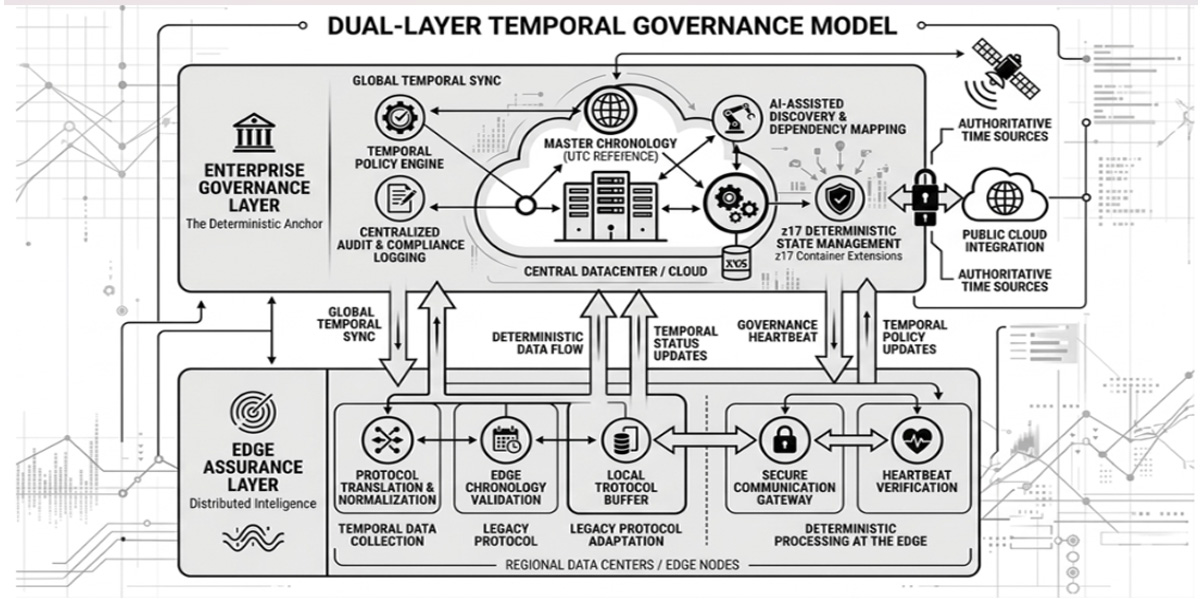
Figure 1: Dual-Layer-Temporal-Governance-Model
The Dual-Layer Temporal Governance Model illustrates an architectural framework designed to protect distributed systems from temporal risks such as the Y2K38 problem. It establishes a structured flow between chaotic edge environments and a centralized, highly reliable core. It has the following components:
- Edge Assurance Layer (Distributed Intelligence): This layer acts as a bridge, collecting temporal data from diverse edge devices, including legacy hardware and industrial sensors. It performs protocol translation and normalization, effectively “cleansing” timestamps and buffering local data before sending a deterministic flow to the central governance layer.
- The Governance Heartbeat: The model maintains system integrity through a continuous bidirectional flow. The Enterprise Layer sends governance heartbeats and policy updates to the edge, while the Edge Layer provides status updates, ensuring that every participating system remains synchronized and operationally trusted.
The Enterprise Governance Layer
This layer serves as the centralized “Anchor of Truth.” It provides the high-level orchestration required for continuous validation, AI-assisted dependency discovery, and historical audit integrity. Rather than just managing patches, the Enterprise Layer maintains the authoritative time reference for the entire organization. It uses deterministic platforms like the IBM z17 and zCX to validate every incoming edge event against a master chronology, ensuring that operational continuity is preserved even as individual components approach their 2038 limits.
The enterprise solution focuses on:
- Centralized governance
- Enterprise validation
- Historical audit integrity
- Compliance orchestration
- AI-assisted analytics
- Authoritative timestamp management
- Long-term operational continuity
Together, these layers create a controlled bridge between legacy operational infrastructure and future-ready enterprise governance.
Why the 2038 Deadline Is Misleading
One of the most dangerous assumptions surrounding Y2K38 is the belief that the problem begins in 2038. In reality, the impact may appear much earlier. Many systems already perform:
- Future date calculations
- Long-term scheduling
- Certificate validation
- Predictive maintenance forecasting
- Archival retention planning
- Insurance lifecycle calculations
- Infrastructure planning beyond 2038
Some applications may already contain hidden failures triggered by future date simulation. In other words, organizations do not have until 2038 to respond. The testing window has already begun.
The Human Challenge
Technology is only part of the equation. The larger challenge may ultimately be organizational. Many of the engineers who built legacy environments have already retired or will retire before 2038. Documentation may be incomplete. Vendor support may no longer exist. Source code may be unavailable. This creates a growing knowledge gap.
Future remediation efforts will require collaboration between:
- Mainframe specialists
- Embedded systems engineers
- Infrastructure teams
- Cloud architects
- AI engineers
The organizations that begin preparing early will possess a major operational advantage.
Looking Beyond Remediation
Perhaps the most important realization is that Y2K38 should not be viewed merely as a technical correction project. It is an opportunity to:
- Reassess enterprise visibility
- Modernize operational governance
- Improve infrastructure resilience
- Introduce AI-assisted observability
- Strengthen audit integrity
- Build future-ready architectures
- Bridge legacy and modern ecosystems
The organizations that treat Y2K38 only as a patching exercise may solve immediate technical issues while missing the larger architectural transformation opportunity.
Final Thoughts
The world successfully survived Y2K because organizations acted before the deadline. Y2K38 demands a similar level of foresight—but in a far more interconnected technological landscape. This time, the challenge extends beyond datacenters into operational technology, embedded infrastructure, edge ecosystems, and globally distributed digital supply chains.
The question is no longer whether vulnerable systems exist. The question is whether enterprises possess sufficient visibility, governance, and validation capability to identify and manage them before silent timestamp failures begin affecting critical operations.
The journey toward 2038 has already started. The organizations that prepare early will not only reduce risk but may define the operational standards of the next-generation enterprise ecosystem.
The Year 2038 problem forces us to rethink a fundamental assumption: that time can safely remain a background OS function. In a distributed world, chronology determines operational sequencing, transactional trust, and AI accuracy.
Y2K38 is an architectural warning. It signals that our distributed systems require a far more robust model for governing temporal integrity. As we look toward the next decade, the architectural strengths of deterministic platforms—centralized governance, operational continuity, and trusted state management—will become the blueprint for survival.
The next decade will not just redefine how we process data; it will redefine how we govern time itself.

0 Comments