




This month, the Planet Mainframe Virtual Mainframe User Group welcomed Claire Connor, Principal Pre-Sales Consultant at Geniez AI, for a practical look at how generative AI can support CICS professionals.
The conversation focused on a familiar operational challenge: CICS environments work, often extremely well, but understanding why they work can depend on knowledge scattered across system output, runbooks, program definitions, monitoring tools, and the memories of experienced specialists.
That gap matters. When a production abend occurs, a change window is approaching, or an auditor asks why a configuration decision was made years ago, teams need answers quickly. AI’s value is not in replacing CICS expertise, Connor emphasized, but in helping teams find and organize the information they need so human experts can make better decisions faster.
The Knowledge Problem in CICS
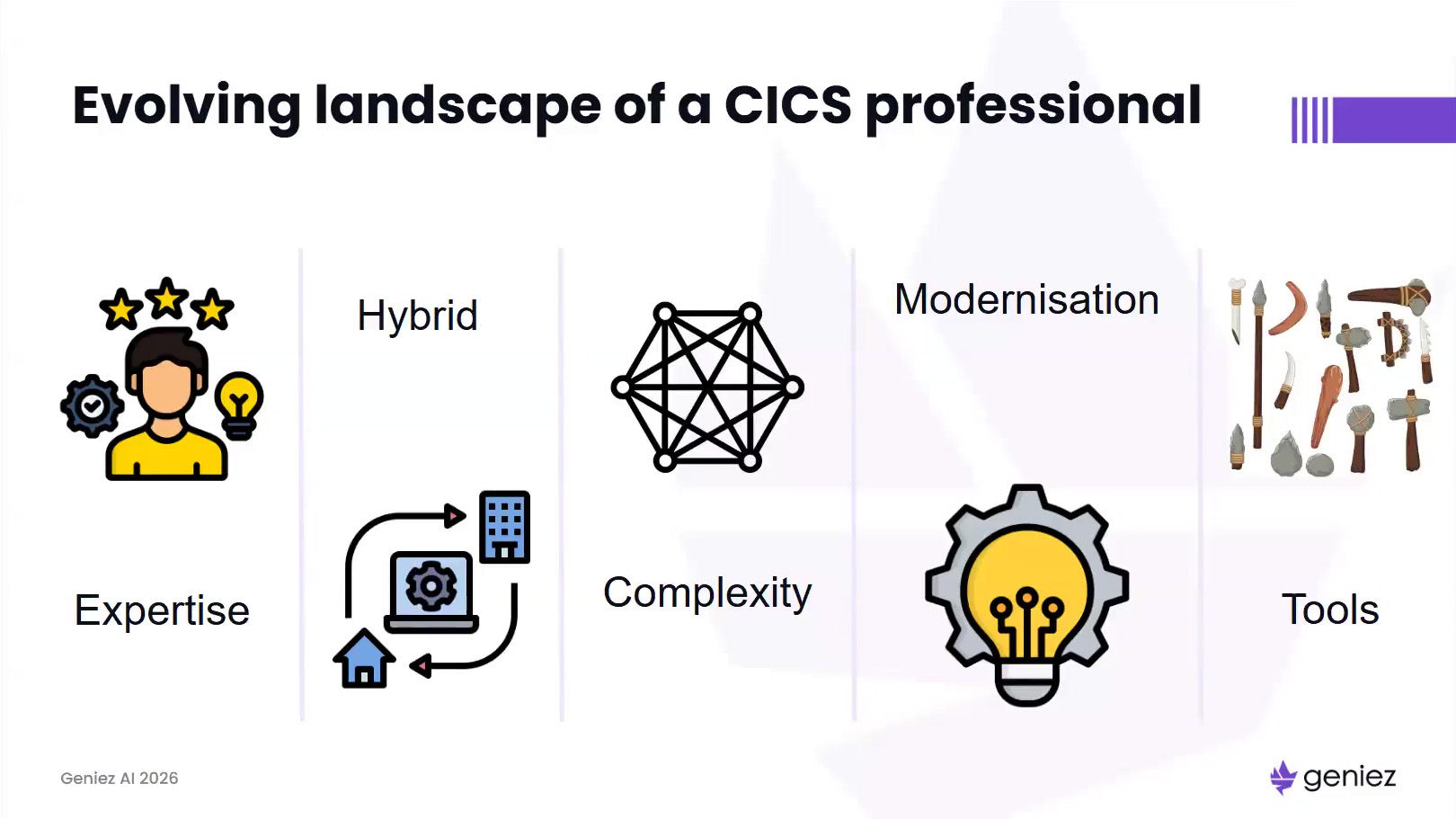
Modern CICS environments are complex, interconnected, and under pressure. Transactions, programs, regions, LPARs, integration points, release levels, APIs, messaging platforms, and distributed front ends all contribute to a larger operational picture. At the same time, many teams are managing retirements, limited documentation, and junior staff who are inheriting systems they did not build.
Connor described this as the difference between a system that works and a system that is truly understood. The risk is not that expertise does not exist. The risk is that it may not be accessible at the moment it is needed.
Where AI Can Help
The most useful AI use cases are often the least glamorous: gathering context, summarizing output, identifying likely areas of risk, and helping teams decide where to look next.
In the session, Connor demonstrated an AI agent connected to CICS data sources and asked it for the current status of a CICS environment. The agent used console commands and returned a summarized health view of the active region. A second prompt asked which CICS transactions would be risky to modify. The AI analyzed available information and categorized transactions by risk, distinguishing critical system transactions from lower-risk candidates.
The point was not that AI should make the change decision. The point was that it can compress the time spent collecting and interpreting information before a CICS professional reviews the results.
Potential CICS use cases include health checks, pre-change assessments, post-incident summaries, transaction response-time reviews, configuration drift checks, audit support, and onboarding help for team members who are still learning the environment.
Don't miss these other great articles
Prompting Without Overcomplicating It
Connor also challenged the idea that users need elaborate prompt-engineering skills before AI becomes useful. Short prompts can be valuable during an incident when someone needs a quick starting point. Longer prompts are better when preparing for a change window or when a more complete review is needed.
For CICS teams, useful prompt details may include the relevant region, LPAR, transaction, program, timeframe, time zone, preferred data source, and desired output format. The more specific the request, the more targeted the answer is likely to be.
From Prompts to Repeatable Workflows
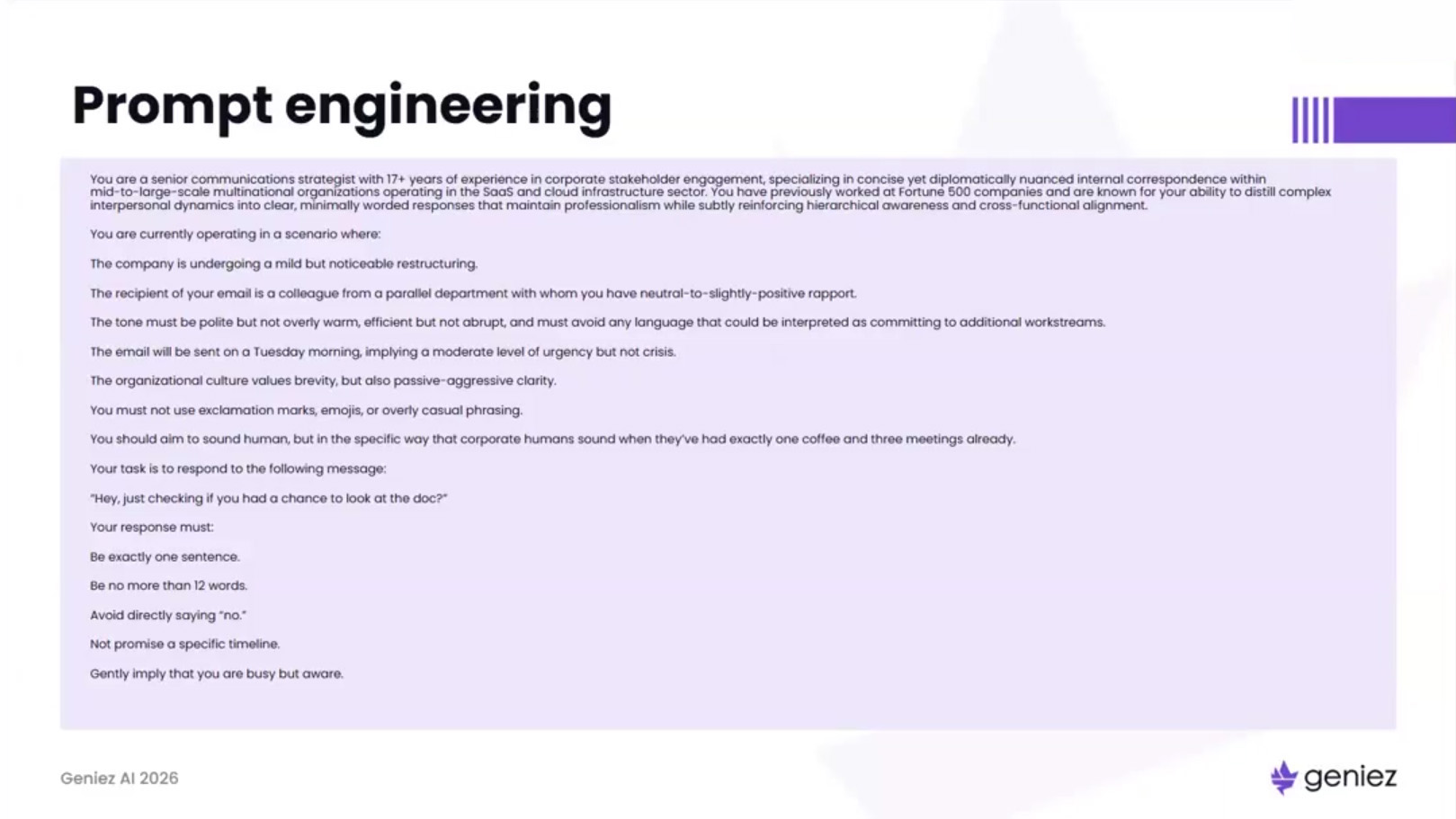
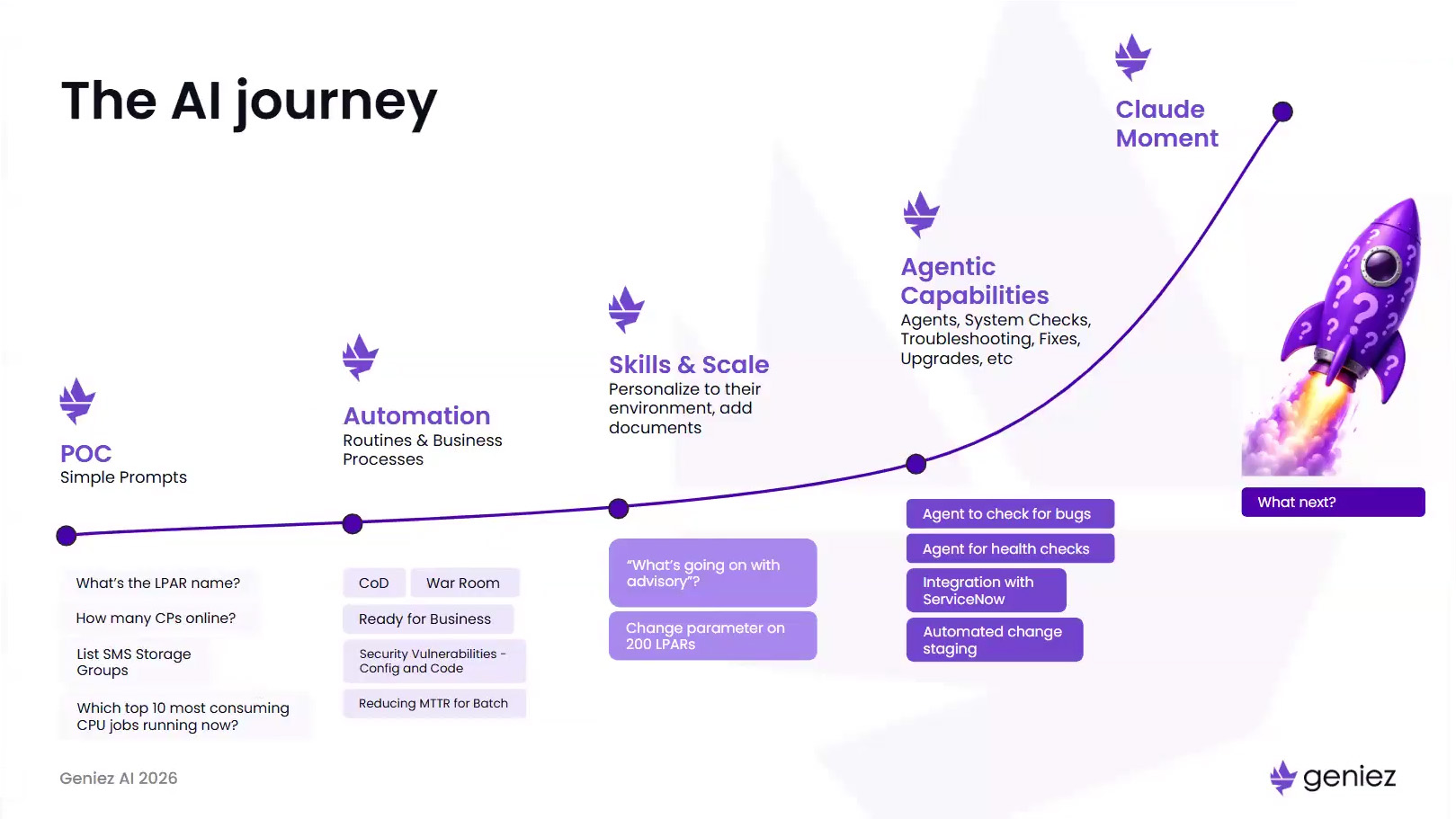
A practical next step is turning useful prompts into saved commands or scheduled routines. For example, a team could create a reusable command for a Monday morning CICS health check, a standard pre-change review, or a post-incident summary.
That makes the process more consistent across the team and helps junior staff benefit from checks designed by more experienced specialists. Scheduled routines can take this further by producing recurring summaries across multiple systems without requiring someone to manually gather the same information each time.
Guardrails Still Matter
The Q&A also addressed security and access control. Connor cautioned against giving AI unrestricted access to mainframe environments. A sensible starting point is read-only access, tightly governed data sources, and validation of responses before expanding the role of automation.
Existing security models still apply. Tools such as RACF, ACF2, or Top Secret should continue to govern what users and AI-enabled workflows can access. AI should not become a shortcut around established mainframe controls.
A Practical Path Forward
For CICS teams, the near-term opportunity is clear: use AI to reduce the time spent searching for information and increase the time available for analysis, judgment, and problem-solving.
The best starting point is not full automation. It is controlled experimentation: read-only prompts, repeatable commands, scheduled summaries, and carefully governed workflows. Used well, AI can help CICS professionals make complex environments more understandable, support faster troubleshooting, and preserve institutional knowledge before it disappears.




0 Comments