



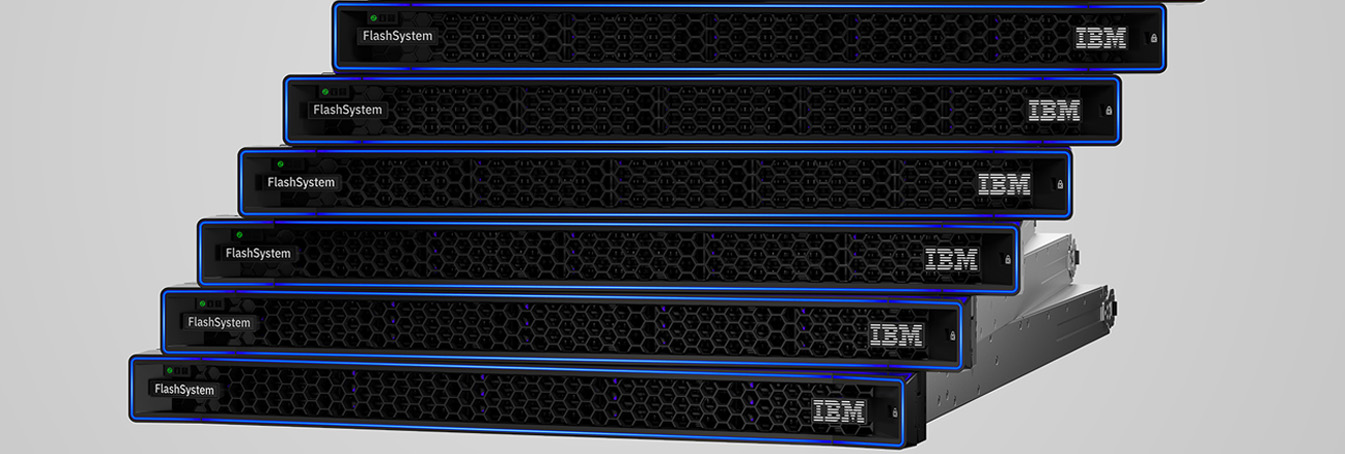

Today, IBM announced its latest FlashSystem models. There’s no new z/OS capability, no IBM Z hardware refresh, and no features aimed directly at system programmers. In fact, IBM confirmed in its media briefing that the new FlashSystem line is not intended for z/OS CKD workloads, though it is compatible with LinuxONE on Z.
So why is Planet Mainframe talking about it?
Built for hybrid mainframe environments
For one, modern mainframes rarely operate in isolation. They coexist with Linux on Z, x86 platforms, analytics systems, and cloud extensions.
The new IBM FlashSystem 5600, 7600, and 9600 models introduce agentic AI–driven automation and security enhancements to a storage platform that already underpins many IBM Z deployments. While FlashSystems don’t change how mainframes run, they do reduce the effort required to keep mainframes running.
“These are the systems that have to always be on. If there’s ever a problem with your primary flash storage, business operations cannot continue.”
— Sam Werner, GM, IBM Storage
The FlashSystem 9600, in particular, targets the workloads where IBM Z remains strongest: systems that demand scale, predictability, and continuous availability.
Why FlashSystem matters to mainframes
In IBM Z environments, FlashSystem often serves as the primary external storage, connected via FICON and trusted to run mission-critical workloads – think core banking, claims processing, enterprise resource planning (ERP), and government systems.
New FlashSystems don’t change how mainframes run. Rather, they reduce the effort required to keep them running and delivers 40% greater data efficiency.
The new FlashSystem generation doesn’t change how those workloads run. Instead, it focuses on reducing the operational effort around them, a priority for mainframe teams everywhere.
Autonomous storage meets mainframe reality
IBM is positioning FlashSystem.ai as autonomous storage and using agentic AI to serve as a “co-administrator” for monitoring, tuning, diagnosis, and remediation. If that sounds like AI relieving some grunt work, you’re right.
Storage administration, compliance documentation, and capacity planning consume time and skills – and time – that many teams no longer have. FlashSystem.ai aims to address that pressure by automating routine tasks and generating reasoning to support audits and regulatory reviews.
A conversation with AI
IBM described this automation as a shift toward “intent-based administration.” Rather than navigating complex UI panels, administrators can communicate directly with storage via AI. The focus is on transforming the way users interact with the system, explained Alastair Simon, Vice President of Storage Systems Development at IBM.
“You’re no longer having to go through UI panels and create volumes. You can have a conversation with the AI and say, ‘I want to create a workload with this characteristic. Please find the best place for it and provision it for me.’ Enter, and you’re done,” said Simon. “It does everything else behind the scenes.”
For mainframe teams, the appeal of new FlashSystem Storage is practicality. The result is a smaller operational area for teams already managing complex, long-lived systems.
Ransomware detection at the storage layer
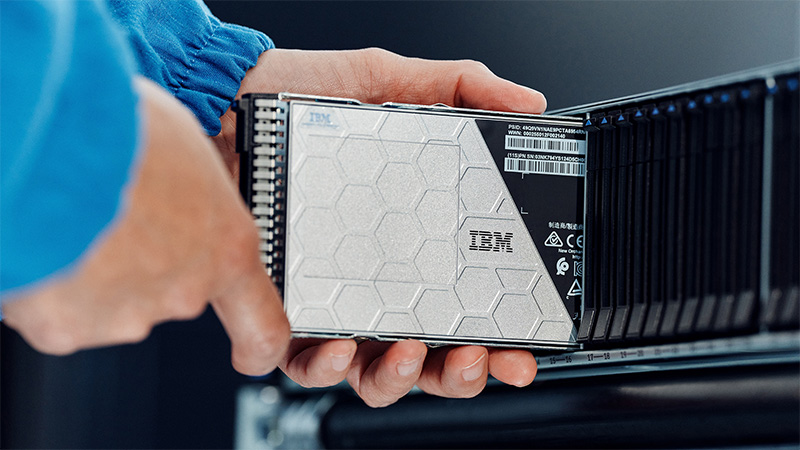
One of the most relevant upgrades for mainframe-centric organizations is the fifth-generation FlashCore Module.
The new FlashCore drives perform hardware-accelerated analytics on every I/O. According to IBM, this enables ransomware detection in under a minute – without host-based agents or operating system changes.
“The quicker you can detect [ransomware], the shorter you can make the recovery point.” — Sam Werner, GM, IBM Storage
During the press briefing, IBM was asked whether one minute was too long for detecting ransomware. “The quicker you can detect, the shorter you can make the recovery point objective,” Werner said. He went on to explain that guaranteed detection time allows teams to plan specific recovery strategies rather than guessing how far back they need to roll.
For mainframe environments, this matters because threats often originate outside z/OS, from distributed systems that share data or storage paths. Detecting anomalies at the storage layer adds a layer of defense that operates below the application and OS layers. The result is stronger resilience without disrupting existing controls.
The Quiet Value of This Release
New FlashSystem Storage is IBM modernizing a layer that mainframe teams rely on every day – but rarely want to manage.
By pushing intelligence and automation deeper into storage, IBM is reducing friction around some of the most stable and critical systems in enterprise IT.
That kind of progress doesn’t make headlines in the mainframe world. But it’s exactly the kind of product that pays off over time.
This article was developed with the assistance of AI tools.
Why This Matters to Mainframe Teams
Less operational drag
Autonomous storage reduces time spent on provisioning, tuning, and documentation.
Security without disruption
Storage-level ransomware detection adds protection without changing z/OS workflows. Detection at the storage layer can identify attacks originating from distributed systems before they move into shared data spaces.
Relief for scarce skills
Automation automates routine storage tasks, freeing experts to focus on higher-value work.
Built for longevity
FlashSystem supports hybrid architectures without undermining mainframe stability.




0 Comments