





Purpose: How organizations justify investment
In the 2026 Arcati Mainframe User Survey, economic considerations appear to be a boundary condition rather than a primary driver of platform change. Cost influences timing and scope, but it does not dominate strategy independent of workload criticality, risk tolerance, or business dependency.
Mainframe Budget Share Is Defined
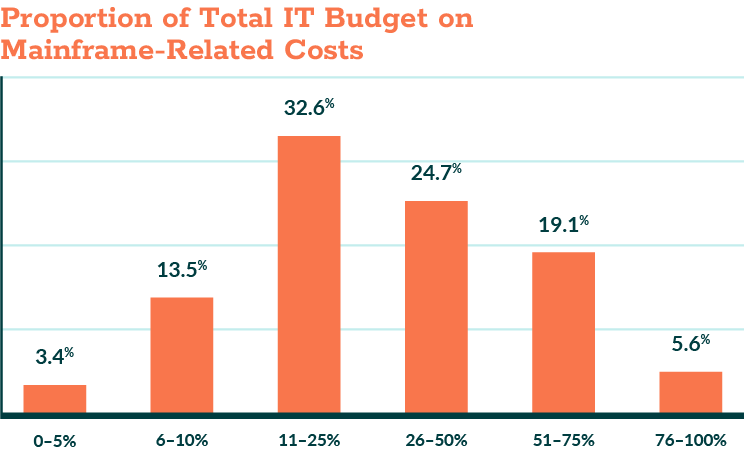
Figure 9.1: Proportion of Total IT Budget Allocated to Mainframe Costs (2026)
Question: What proportion of your total IT budget is spent on mainframe-related costs?
Respondents report that mainframe-related costs represent a defined share of overall IT spend. Where that share is higher, it tends to correlate with greater business dependency rather than inefficiency. Where it is lower, it often reflects architectural distribution across platforms rather than reduced importance.
The data positions the mainframe as a focused investment supporting specific high-impact workloads.
Spend Growth Is Measured
Most respondents describe stable or moderate growth in IBM Z spending. Abrupt expansion or contraction is uncommon. Spending appears to be driven by lifecycle upgrades, maintenance, and selective modernization rather than by structural change. This reinforces a pattern seen elsewhere in the survey responses: change is incremental and risk-managed.
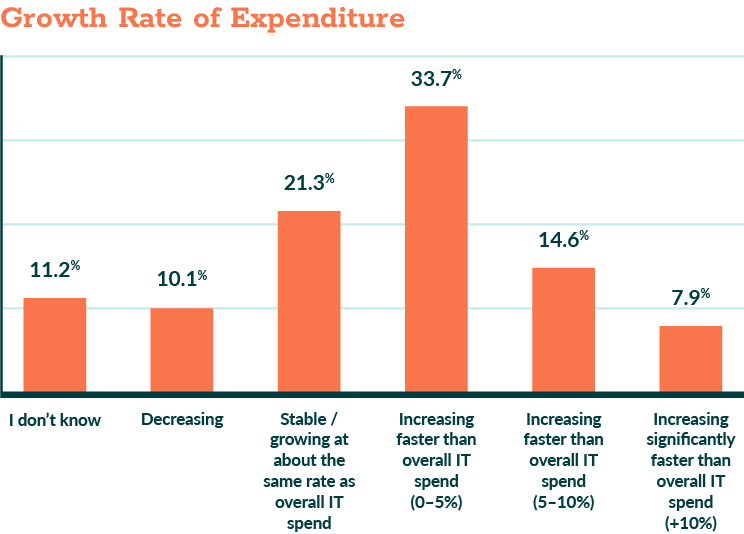
Figure 9.2: Growth Rate of IBM Z Hardware and Software Expenditure (2026)
Question: How fast is your IBM Z-related IT expenditure growing for hardware/software?
Cost-Effectiveness Is Evaluated by Workload Fit
Questions about cost-effectiveness are most often assessed in relation to the nature of workloads running on the platform. Respondents supporting high-volume transaction processing or system-of-record functions are more likely to describe the mainframe as cost-effective in context.
The survey does not frame cost as an abstract comparison across platforms. Instead, it reflects evaluation tied to business value delivered.
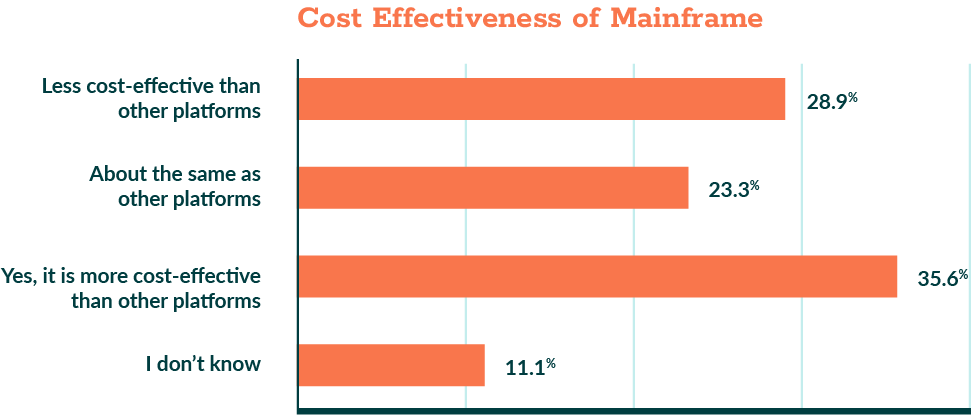
Figure 9.3: Perception of Mainframe Cost-Effectiveness for Current Workloads (2026)
Question: Do you consider your mainframe cost-effective for the workloads currently running on IBM Z?
Perceptions Have Evolved Gradually
Responses suggest gradual recalibration rather than abrupt reassessment. For many organizations, experience with optimization and tooling has shaped how cost is understood and managed. There is no evidence of a sudden shift in economic confidence.
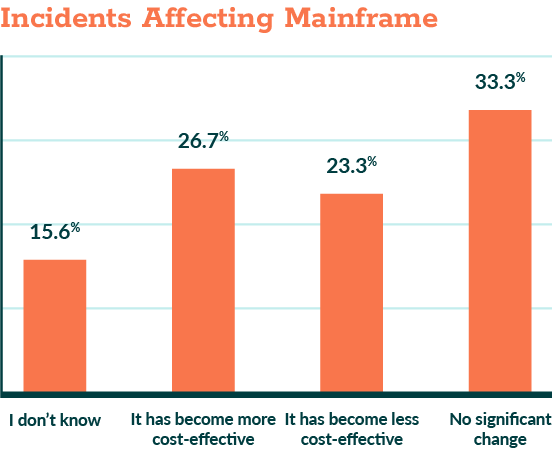
Figure 9.4: Change in Perception of Mainframe Cost-Effectiveness Over Time (2026)
Question: Has your view of mainframe cost-effectiveness changed in the past 5–10 years?
Economics as a Constraint, Not a Trigger
Taken together, the data indicate that economic considerations constrain scope and timing, rather than costs triggering disruptive change. Organizations refine platform use through optimization, tooling, and selective modernization. Investment levels signal a focus on sustainability and efficiency, not disengagement.
Cost frames most decision-making, but it operates within the realities of risk, governance, and workload dependency, not overriding them.


0 Comments